Pepper has long held deep cultural and economic significance for both India and China, forming a vital link in the exchanges between the two civilisations. The spice trade, in particular, offers a rich and tangible way to understand these historical and contemporary connections, as pepper and other spices moved along ancient overland and maritime routes and continue to shape bilateral ties and cultural perceptions. This shared history has shaped how both cultures experience and present their culinary cultures, material trade and medical science. The global image of Indian food as bold and richly spiced, and the unmistakable heat and numbing quality of Sichuan pepper in Chinese cuisine, both reflect the cultural connect of this biological go-between.
Medical Significance
Traditional Chinese medicine emphasizes pepper's stimulation function, which can reduce qi (fine particles that one’s body is composed of), remove cold, and stimulate secretion in the stomach to aid digestion. Records of the usage of pepper in Chinese medicine can be found in the Materia Medica of the Tang Dynasty, in Overseas Medicinal Plants by Li Xun of the five dynasties, the Ri Huazi Medicinal Plants, Augmented Materia Medica and Classified Materia Medica of the Song Dynasty, and the Compendium of Materia Medica of the Ming Dynasty and other traditional Chinese writing on herbs. Pepper, along with ginger and long pepper was also used to dispel cold according to the third volume of The Account of Buddhism Sent from the South Seas by the Chinese monk Yi Jing.
Black Pepper

Source: Economic Times
The spice was equally important in Indian medical history as well. Medical manuscripts written by both Chinese and non-Chinese scholars, discovered in Dunhuang reveal prescriptions containing pepper, reflecting the impact of Indian pharmacology. According to Ayurvedic tradition, pepper is considered and used as an aromatic stimulant and carminative to expel gas from the gastrointestinal tract. It is also used to treat dyspepsia, flatulence, and hemorrhoids and sometimes, it can be used as an anti-malarial drug. Pepper was also used in certain rituals to bring rain, the rule of joy and happiness, good luck, and respect. The spice also holds an important role in the Buddhist medical system prevalent in both countries, as it is one of five medicines that can be consumed freely for general well-being. Both Indian and Chinese medical scientific traditions converged on the uses of pepper, with Chinese texts highlighting the impact of Indian medical traditions and practices.
Culinary Use
Pepper was widely used in daily life, particularly in culinary practices, much like it is today. It was one of the early foreign products to reach China, initially prized for its medicinal properties. The dynastic history of the Later Han dynasty records pepper among the goods imported from India, highlighting both its valued status and exotic origin. Indian pepper appears to have been brought to China via a combination of overland and maritime trade routes as early as the first two centuries CE. Classical Chinese texts also describe pepper as a seasoning. In Youyang Essays, Duan Chengshi notes its pungent taste and traces its origins to Magadha, drawing comparisons to the Han pepper.
Chinese Painting of Pepper in Gongbi Style (1644)

Source: Wellcome Collection
Earlier records, such as the History of the Later Han Dynasty, similarly identify India as the source of pepper. Later, Xuanzang’s Record of the Western Regions of the Great Tang mentions schinus molle from the A Zha Li kingdom. The culinary influence of pepper is particularly evident in Sichuan cuisine. The region’s iconic stir-fries originally relied on pepper, especially Sichuan pepper for heat and flavour. This reliance also reflects the historical importance of imported spices, including black pepper from India, which entered China through established trade networks.
Pepper as “Black Gold”
Apart from the consumption of pepper by culinary and medicinal means, it was also used as a medium of exchange and currency. During a brief period in the second decade of the Yongle period (1424), the salaries of civil and military officials in Beijing were paid in pepper. In addition to official trade and the tribute system, pepper smuggling was widespread during the Ming dynasty. Some of the most successful smugglers were foreign envoys or members of their entourages, with merchants and interpreters often carrying excess spices to sell privately. In 1390, an interpreter for a Ryukyuan tribute mission was caught attempting to bring frankincense and pepper into the capital covertly. Such incidents help explain why pepper came to be known as “black gold” and was regarded as a highly valuable commodity that influenced smuggling and corruption along ancient trade routes.
Beyond its economic importance, pepper also played a key role in religious and ritual life. In Ming China, the imperial court used over 3,500 kilograms of spices every three years in religious rituals and sacrifices to gods and ancestors. In Indian traditions, black pepper similarly holds spiritual and ritual value. In Hindu practice, it is used to cleanse negative energies, purify spaces, and enhance spiritual awareness, whether sprinkled in sacred fire ceremonies (homa), carried for protection, or incorporated into cleansing rites.
Trade and Economic Significance
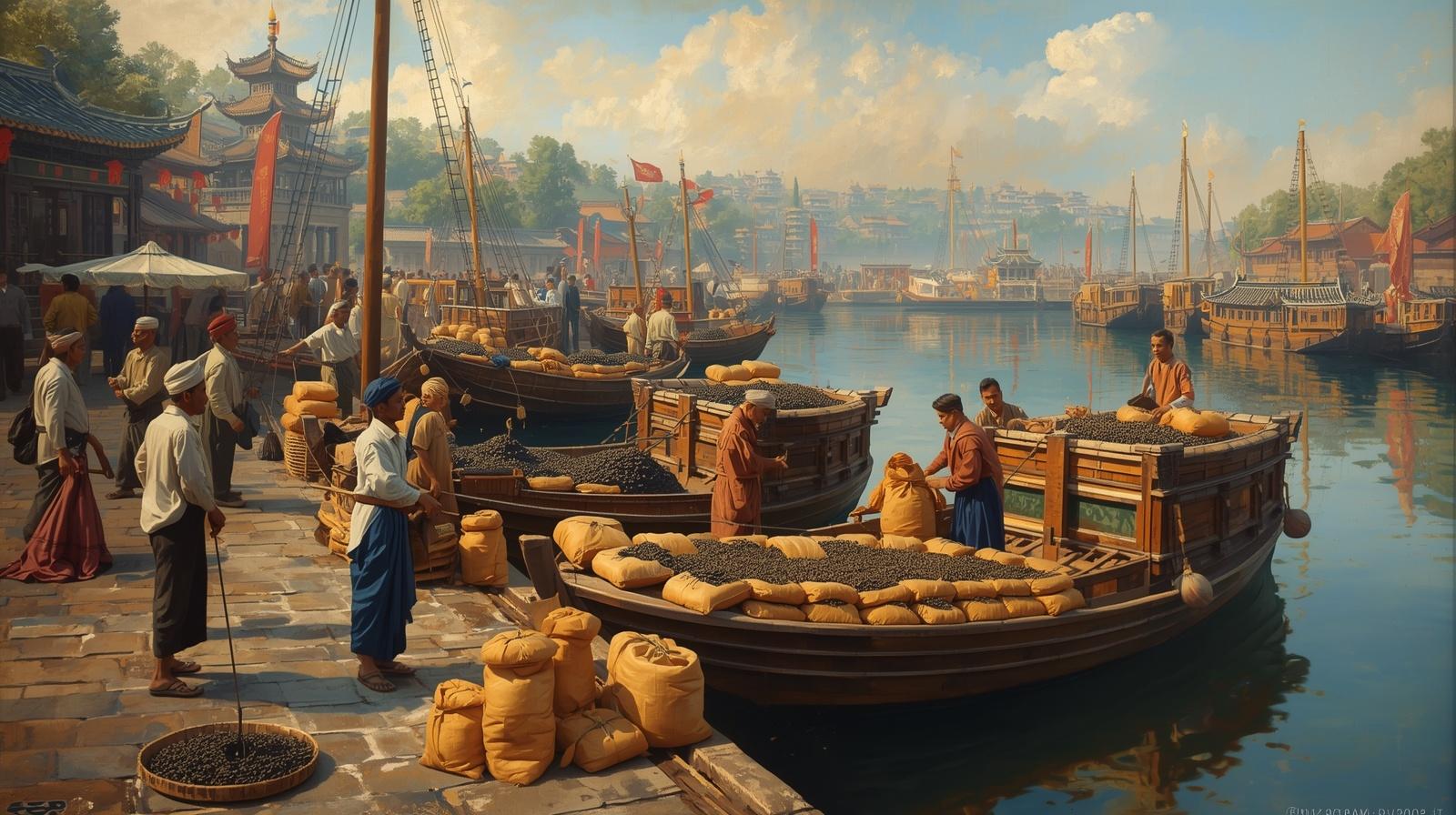
Pepper arguably had a greater role to play when it came to China’s trade relations with other countries, especially India. Trade of pepper between Ancient India and China was documented in Chinese literature, mostly in those pertaining to the traffic between China and foreign countries, and in literature about the southern regions. The spice was considered one of the most valuable commodities in the Siming (now Ningbo) port of the Southern Song Dynasty, among imports from South Asia. Similarly, in Tang and Ming China, pepper was considered a luxury commodity.
Marco Polo’s records from 1277 highlight the scale of pepper trade and the strong presence of Indian traders in China. He notes, “And I assure you that for one shipload of pepper that goes to Alexandria or elsewhere, destined for Christendom, there come a hundred such, aye and more too, to this Haven of Zayton.” Chinese ports like Zayton, now Quanzhou, were extremely central to the ancient global pepper trade network. Pepper trade also had a significant impact on maritime routes originating from the Malabar Coast, which served as the primary export centre. India initially reigned as the primary supplier of pepper in Ancient China, but Java took over this position as the focus shifted to more active participation by Chinese merchants traveling abroad to procure spices directly.
Indian Pepper Plant

Source: The Hindu
Contemporary Significance
Pepper continues to be an important traded commodity between India and China. In 2024, India’s total exports of pepper reached about $1.44 billion, with China accounting for approximately $459 million of those exports, the single largest destination for Indian pepper. Thus, China is still a key market for Indian pepper exports much like in the past, even as India also exports substantial quantities to countries like the United States, Thailand and Bangladesh. Additionally, China itself remains a major player in pepper trade, ranking among the world’s largest importers, with pepper listed as one of its significant imported products.
While China has traditionally been seen primarily as a major importer of pepper, it is also emerging as a growing exporter. In 2025, China exported over $825 million worth of pepper, with key markets including Pakistan, Germany and Ethiopia. This export activity reflects a broader shift, where China is not just consuming pepper but also exporting it to global markets. In fact, China’s pepper export value has been rising steadily, with noticeable year-on-year growth in recent years, indicating its strengthening position in the value chain.
Pepper and the broader spices sector have been part of practical diplomatic engagements between India and China too. The Embassy of India in Beijing has actively promoted Indian spices through official events, including Buyer‑Seller Meets that brought together Indian exporters and Chinese importers of spices. Such meets are aimed at showcasing the flavours and market potential of products like black pepper to China’s food industry. Such initiatives serve as soft‑power tools to build cultural and economic ties, making trade discussions more accessible and fostering deeper connections between business communities in both countries. Additionally, the official Indian Embassy X (Twitter) account in China has highlighted the economic value and cultural significance of India’s black pepper trade in Ming China, highlighting its significance as a soft power and cultural symbol.
In this way, pepper continues to act as a quiet but meaningful link between India and China. More than just a spice, it carries a long history of shared trade, exchange, and cultural interaction between the two civilisations. Even today, these connections remain relevant, showing how something as simple as pepper can continue to shape diplomacy and bilateral relations for millennia.