
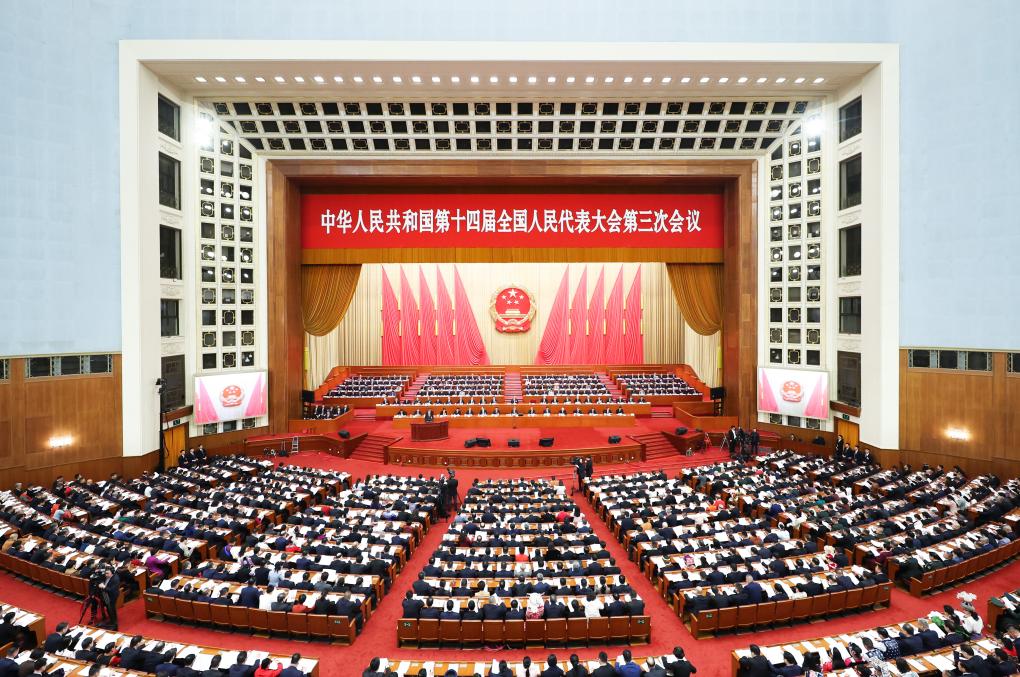
A good start to China’s 15th Five Year Plan (FYP) begins with work arrangements for 2026 made by its provincial governments. The provincial Government Work Reports (GWR) released in late January and early February are indicative of the economic and political targets, priorities and policies that the central government will formalize at the fourth session of the 14th National People’s Congress (NPC) and 14th Chinese People's Political Consultative Conference (CPPCC). The “Two Sessions” begin on March 4th, during which the State Council will detail China’s national policy priorities for 2026. Work reports of five key Party bodies, the NPC, State Council, CPPCC, Supreme People's Court, Supreme People's Procuratorate and Secretariat of the Central Committee have already been discussed and approved at a Politburo Meeting on 30th January. While central planners prepare for the Two Sessions, planners at the provincial level have already concluded local Two Sessions, indicating the policy agenda for 2026.
GWRs released at local Two Sessions by Provincial People’s Governments (PPGs) codify the policy guidance that will be issued at the upcoming national Two Sessions. They detail economic priorities, targets and instruments identified at the provincial level, based on directives transmitted by the Party Centre. What do local GWRs tell us about national policy priorities and planning preferences for 2026?
Strategic Direction and Political Security
Descriptions of economic and political work in provincial GWRs reflect the hierarchical, top-down design (頂層設計) of policy-making in China. First, all provincial governments credit the achievements and performance of their regions to Xi Jinping’s leadership and ideology. His leadership and the scientific guidance of Xi Jinping Thought on Socialism with Chinese Characteristics for a New Era (习近平新时代中国特色社会主义思想) are praised in the sections on accomplishments of 2025. Guangdong’s GWR states that “All achievements in Guangdong have been realised under the strong leadership of General Secretary Xi Jinping and the Party Central Committee” and Gansu states the development of the province “fundamentally stems from the scientific guidance of Xi Jinping Thought on Socialism with Chinese Characteristics for a New Era”. They identify Xi’s inspection tours of the respective province, or his speeches about their province, as guiding governance outcomes in 2025.
Second, the guiding role of directives issued by the Party Centre and central government are to work arrangements for 2026 as well. The sections on key tasks for 2026 begin by stating that adherence to Xi Jinping Thought and directives issued at high-level Party gatherings is necessary to ensure the success of governance work. For instance, Liaoning’s GWR refers to “top-level design” (頂層設計), crediting key Central Party meetings like the Fourth Plenary Session of the 20th Central Committee, Central Economic Work Conference and 20th National Party Congress for providing strategic guidance. With local GWRs making multiple mentions of centralised planning, it is certain that the national GWR in March will further centralise the policy-making power in favour of the Party core. Furthermore, PPGs centralised Xi’s role in policy-making by pledging to advance political security guarantees of his authority in the form of “two upholds” (两个维护), “four consciousnesses” (四个意识) and “two establishments” (两个确立).
Third, guarantees of political security are rationalized through a characterization of China’s internal and external situation as complex and difficult. For instance, Zhejiang’s GWR states that it faced a “complex and intricate external environment” (面对错综复杂的外部环境) and Beijing’s GWR argues that overcoming the “complex and volatile situation” (形势复杂多变) of 2025 was the result of strong leadership with Xi at the Party’s core. Liaoning’s GWR goes further to state that Xi personally outlined the blueprint at every crucial moment on the journey of struggle. Such characterizations signal the importance of strong centralized leadership and manage expectations for economic and political work in 2026.
Snapshot of Growth and Innovation
Provincial leaderships have set a variety of GDP targets, most hovering around the 5-5.5% mark. Along the east coast, foreign trade and manufacturing hubs like Shanghai, Zhejiang, Guangdong, Fujian etc have set targets of around 5% for 2026, with some like Guangdong setting lower target ranges at 4.5 – 5%. Several major provinces have lowered their GDP growth figures by 0.5% compared to the previous year, suggesting that China may lower its national GDP target of previous years from “around 5%”. Notably, GDP targets for some provinces deviate from the 5-5.5% range. For instance, Hainan, home to an ambitious Free Trade Port initiative that recently launched a special customs regime in December, has set a target of around 6%, explained by the expectation that its new initiative will raise growth rates.
Similarly, Tibet has set a target of over 7% and Xinjiang at 5.5 - 6% , reflecting the catching-up momentum of Western and southern provinces. The ambitious targets, above the average, are explained by increased infrastructure investments, industrial relocations, resource endowments and other “late-comer’ advantages. Overall, compared to 2025, 21 provinces have lowered targets and 9 have maintained the same rate.
Lowered GDP targets are rationalized by an emphasis on high-quality growth. As a result, targets for R&D investment that support innovation ecosystems, breakthroughs in key core technologies and technological self-reliance are worth considering. Here too, major economic provinces are expected to play a leading role. Guangdong has outlined 535 billion yuan for R&D investment, an increase of 4.9% compared to 2025, and targeted an R&D intensity of 3.6%. For instance, Zhejiang has targeted R&D intensity at 3.6% and total scientific and technological innovation investment of 780 billion yuan, and Fujian has planned an increase in total social R&D expenditure by 10%.
Notably, some provinces have pushed State-Owned Enterprises (SOEs) to set the pace of R&D investment by mandating that the growth rate of R&D investment by provincial SOEs be 2% higher than the provincial average. Regions like Liaoning, Henan and Shaanxi have also increased R&D investments, pledging growth in innovation-driven development and revitalization.
Sectoral Priorities
Local GWRs outline sector-specific development strategies to advance new quality productive forces and protect competitive advantages in traditional industries. New quality productive forces have been discussed widely, with varying degrees of detail and importance. In China’s eastern regions, provinces are planning to accelerate AI integration and development. Zhejiang has pledged to integrate AI with industrial development, support Hangzhou, Wenzhou and Ningbo in carrying out pilot projects and attain revenue growth of 20% from core AI industry. Like Zhejiang, Guangdong also proposes to accelerate application of AI “across all domains, all times and all industries”. In Fujian, artificial intelligence industrial parks in Fuzhou, Xiamen, and Quanzhou are to be accelerated.
While eastern coastal provinces advance a technology-intensive model of industrial development, inland regions are positioning themselves downstream. Gansu wants to be a green and intelligent computing support base for the AI industry, promising early commissioning of projects in the Qingyang data centre cluster. China’s “digital valley” Guizhou has set a target of increasing its computing power from 150 to 190 ExaFLOPS by 2026, most of which is dedicated to AI.
Like AI and computing architecture, other emerging technology-intensive sectors with industrial potential and key core technologies like new energy, integrated circuits, commercial aerospace, biomanufacturing, humanoid robots, medical devices and equipment manufacturing are prioritised in varying measure across provincial GWRs. The future of high-quality growth in China’s economy rests on the execution of strategic development plans of these new-quality productive forces.
GWRs of central and northern regions are closely focused on upgrading traditional industries to maintain China’s existing competitive advantages in export and manufacturing. For instance, Henan is focused on building national advanced manufacturing clusters in sectors like power equipment, automobiles and logistics, promising 200 new smart workshops and factories. It plans to contribute to a unified national market by connecting eastern and inland provinces through 10 national logistics hubs and 5 cold chain logistics hubs, creating a circulation corridor for bulk commodities in Henan, Anhui, Jiangsu, and Zhejiang.
Liaoning GWR has plans to implement new plans to stabilize market share in automobiles, oil, steel, and other sectors, promote large-scale equipment renewal for digital and intelligent transformation and cultivate 6 world-class, 7 national-level, and 9 regional-level industrial clusters in areas like marine engineering and mining. In the north, Jilin has emphasised transformations in its automobile and specialty chemicals sectors. The effort to maintain manufacturing competitiveness, strength in export markets and global value chains, alongside cultivation of emerging, future and pillar industries, is part of a new development pattern of “multi-industry parallel development”.
Managing Risk and Navigating Challenges
Local GWRs are managing emerging challenges in China’s economy while simultaneously planning the future of economic growth and productivity. These challenges are serious, like hidden government debt and changes to population structure, and could derail or blunt policy initiatives. For instance, controlling financial risks features in all provincial GWRs, highlighting the urgency of tackling local and hidden debt. Regions are planning improvements in government debt management mechanisms, prevention of “new officials ignoring old problems” (新官不理旧账) and achieving zero hidden debt. Changes to population structure, which impact labour supply and social stability, are considered emerging challenges, with targeted interventions in childbirth, elderly care and employment issues to reduce their impact on economic stability. For instance, Zhejiang’s GWR acknowledges that the supply of public services relating to childbirth falls below public expectations, and Guangdong promises to reduce the cost of childbirth for families and build 5 new municipal-level childcare service centers and 10 county-level childcare service institutions.
Besides policy challenges on the horizon, existing drags on growth and development are also highlighted. The real estate market, which has been a persistent headwind for growth, will be addressed by controlling supply, reducing inventory, issuing housing vouchers and reforming the housing provident fund system. Considered key to the bottom line of social harmony and stability, GWRs have consistently emphasised handling of debt and real estate risks to avoid shocks to the economy. An equally uniform and consistent emphasis across all local GWRs is on consumption. It has been promoted as the first, and perhaps most important, key task of 2026. Although expanding domestic demand through infrastructure continues to be emphasised, consumption through services, e-commerce, tourism, healthcare, fashion and digital economy emerges as a key priority of central economic work in 2026.
Key Takeaways
The policy signals embedded in local GWRs are closely aligned with the directives issued by the Party Centre over the last year at major economic and governance meetings and conferences. They are a reflection of the trend toward policy centralization and concentration of policy-making authority. It also suggests that incentivized compliance with central directives is embedded in governance structures, alongside a formalized adherence to Xi Jinping Thought as the governance ideology for China.
Economic work for 2026 and the 15th FYP appears to be largely focused on technological advancement in strategic sectors, alongside protection of China’s manufacturing strengths in traditional industries. As a result, provinces have prioritized innovation to facilitate a new pattern of development and are planning to upgrade their competitive advantages in export-oriented sectors. The search for new growth drivers isn’t just reliant on technology or exports, but also stimulation of consumption and domestic demand to build a unified national market. Overall, managing the slowdown of growth and transition to new drivers emerges as a key priority for economic work in 2026, and thus lower targets are an acceptable tradeoff for stability.
Image: China Daily
Author
Rahul Karan Reddy
Rahul Karan Reddy is Senior Research Associate at Organisation for Research on China and Asia (ORCA). He works on domestic Chinese politics and trade, producing data-driven research in the form of reports, dashboards and digital media. He is the author of ‘Islands on the Rocks’, a monograph on the Senkaku/Diaoyu island dispute between China and Japan. He is the creator of the India-China Trade dashboard, the Chinese Provincial Development Indicators dashboard and co-lead for the project ‘Episodes of India-China Exchanges: Modern Bridges and Resonant Connections’. He is co-convenor of ORCA’s annual conference, the Global Conference on New Sinology (GCNS) and co-editor of ORCA’s daily newsletter, Conversations in Chinese Media (CiCM). He was previously a Research Analyst at the Chennai Center for China Studies (C3S), working on China’s foreign policy and domestic politics. His work has been published in The Diplomat, 9 Dash Line, East Asia Forum, ISDP & Tokyo Review, among others. He is also the Director of ORCA Consultancy.