

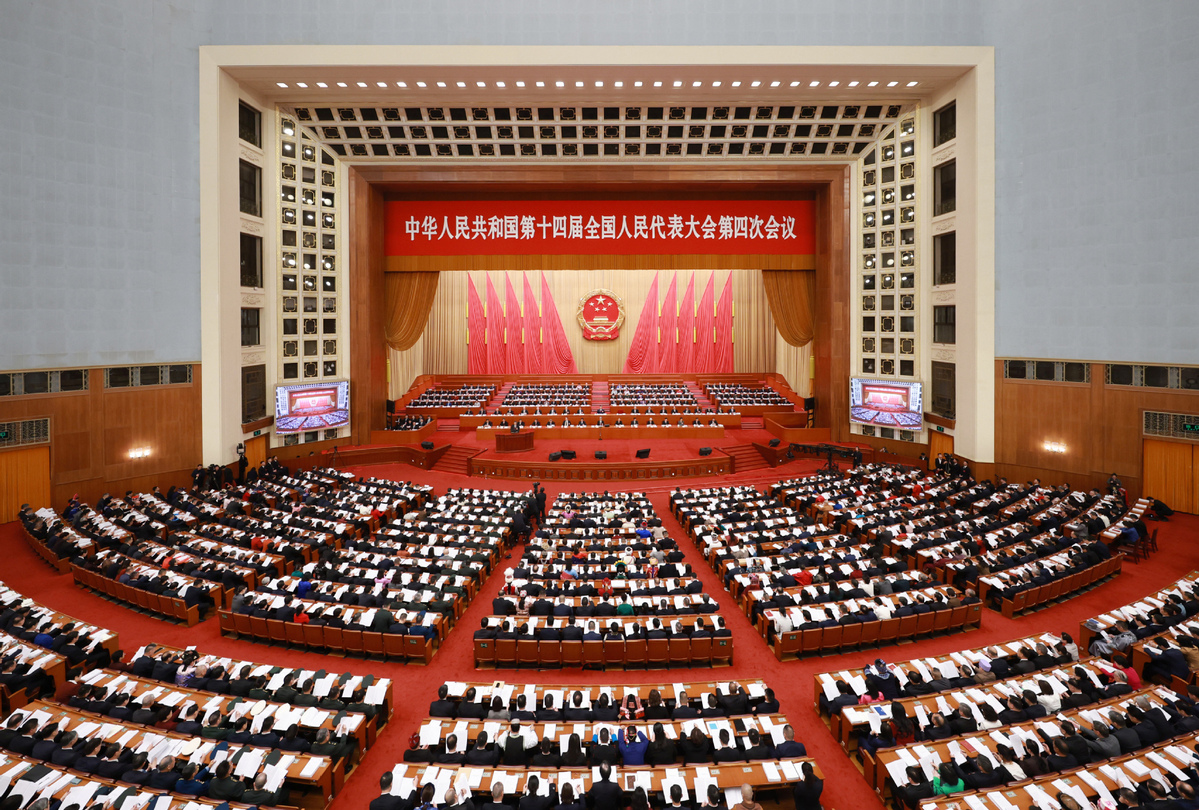
China’s Two Sessions reveal national targets for economic and social development, setting the tone for the 15th Five Year Plan (FYP). The Government Work Report (GWR) discusses progress in 2025, and more importantly outlines new goals for 2026, setting the parameters for performance in terms of economic growth, innovation, social stability and macroeconomic conditions.
Further understanding of the targets and priorities in the national GWR is possible through a comparison of GWRs released by provinces in early 2026, with those of 2025. They offer a glimpse of changing priorities, shifting expectations and the centre-local variations in ideation and implementation of specific targets. Based on targets for key indicators extracted from provincial GWRs in 2026 and 2025, the following reflections are instructive of China’s policy roadmap for 2026.
1. Provinces Have Reduced GDP Growth Targets Compared to 2025
GDP growth targets set by the central government are symbolic and substantive because they reflect perceptions of macroeconomic conditions and set expectations of performance by provincial governments. Provinces across China have set lower GDP growth targets in 2026 compared to 2025 by around 0.5% (Figure 1). Only Jiangxi has set a higher target for 2026, while 18 provinces have lowered their targets compared to 2025. The lowered GDP growth targets for 2026 mirrors the decrease in China’s national GDP target, reduced to 4.5 – 5 % in 2026. The lowered targets for 2026 by provinces offer a reflection of ground realities faced by local governments, who continue to face challenges in maintaining high GDP growth rates in the face of transformations underway in China’s economic structure.
2. Innovation is a Top Priority for 2026, More than 2025

With high-quality development and technological innovation emerging as key priorities over the last few years, local governments have become more aggressive in policy planning as it relates to Research and Development (R&D) expenditure. R&D targets, measured as growth in R&D Intensity or total social R&D expenditure) set by provinces in 2026 are a departure from 2025 because many more provinces have set specific targets for 2026 than they did in 2025 (Figure 2). 14 provincial governments in 2026 have set specific targets for R&D expenditure growth compared to only 8 provinces in 2025. There is also a notable increase in R&D spending growth targets set by eastern coastal provinces, who are leading innovators, compared to 2025. Shanghai, Jiangxi, Jiangsu and Fujian have increased R&D expenditure targets in 2026 compared to 2025. As the emphasis on growth drivers shifts from production output to technology development and innovation, more policy support, in monetary terms, for innovation can be expected from provincial governments in 2026.
3. Fixed Asset Investment Targets Lowered 
Fixed asset Investment (FAI) drove China’s economic growth for over two decades, with large amounts of capital flowing into infrastructure, real estate and industrial capacity expansion. Its relevance to production and stimulating economic activity justified the state-led investment. However, in 2026 provinces have trimmed their FAI growth targets compared to 2025, with median FAI growth dropping by 0.5% (Figure 3). The box plot above displays the range of FAI targets for 2025 and 2026, which reveals that fewer provinces have set FAI targets of above 5.5%. The upper and lower bounds of the box plots for 2026 are between 3 and 5.5%, while the same bounds for 2025 were 5 and 7.5%. It indicates that more provinces have set targets within a lower range compared to 2025. Moreover, only 13 provinces have set specific targets for FAI growth for 2026 compared to 20 provinces in 2025, indicating the diminished significance of specific targets for FAI growth alongside the downward trend of actual targets.
4. Economic Drivers of Social Stability Retain Importance

Economic factors determining social stability, like unemployment, social welfare, inflation and poverty levels, are a sensitive issue for policymakers who increasingly focus on social stability as economic growth slows. Urban unemployment in particular is a valid indicator of social stability, which provinces have maintained roughly at 5.5% (Figure 4). Almost all provincial governments in 2026 retained the same target as they laid out in 2025, demonstrating continuity in the emphasis on maintaining social harmony and controlling economic risks relating to China’s economic transition. Although the language qualifying numerical targets may vary depending on province, like the use of words like “around”, “below” or “in line with national average”, the numerical targets cluster around 5.5% for urban unemployment. The same pattern is observed in the data on inflation targets.

Consumer Price Inflation (CPI) is another economic factor that directly impacts household expenditure and savings, with implications for social stability. Local governments in China have been very measured in CPI targets set for 2025 and 2026, making no changes to the target across both years (Figure 5). Almost all provinces have set the same target of “around 2%” in 2025 and 2026. The absence of any changes to CPI and unemployment targets indicates that social stability will remain a key underlying factor in 2026 that explains consistency in economic targets closely tied to social stability.
5. Stagnant Budget Revenue Growth and Retail Sales Growth Targets

Two surprisingly stagnant targets across provincial government work reports are public budget revenue growth and retail sales growth. Targets for public budget revenue growth have remained similar to targets in 2025 and in some cases, were lowered (Figure 6). The median target for 2026 was 2.25%, which is lower than the median target for 2025 of 3%. Even the upper and lower bounds for the budget revenue growth targets have declined in 2026 compared to 2025. This is surprising because the issue of local government debt has emerged as a priority issue, which could be controlled by raising provincial government budget revenues. However, by marginally lowering the targets, provinces have perhaps declined to place greater emphasis on raising revenues, and instead may focus on managing expenditures.
Targets for retail sales growth are also surprisingly stagnant in 2026, compared to 2025 (Figure 6). This stands out because, like debt, consumption has emerged as a key focus for central planners as part of the emphasis on consumption-led and services-driven growth. Unlike in 2025, when some provinces like Tibet and Hainan set high targets of around 8-10%, in 2026 even the outlier provinces have reined in targets within the 3-7% range. The moderation of retail sales growth targets even though China has initiated various policies to stimulate retail consumption is surprising, and reflects the challenges of generating improvements in consumption patterns.
Takeaways
Overall, policy targets in 2026 present a moving picture of China’s development trajectory and priorities. With provinces shining a light on the road ahead for economic and social development, the national targets set at the Two Sessions present not one, but two pictures of national development. One set out by the central government, and the other by local governments. The subtle variations and differences between the two illustrate the difficulties of translating central policy directives in a top-down policy making system into realistic outcomes at the local level.
While the GDP growth target is closely watched and a major macroeconomic signal, the shift in 2026 targets at the local level is telling. Economic growth is slowing, and targets at the local level more openly reflect that downtrend. Innovation is a key national priority, and more local governments have got on board, setting aggressive targets and signalling compliance with central directives. As China moves towards high-quality growth, FAI targets are less explicitly declared, hinting diminished significance. Although the central government may not signal major shifts in FAI targets, provincial government targets certainly indicate a change in approach. Social stability remains a key priority for a China navigating complex and challenging internal and external headwinds. Unemployment and inflation targets thus remain unchanged, suggesting that controlling social stability risks emanating from economic domains will remain a top priority for China in 2026.
Image Source: China Daily
Author
Rahul Karan Reddy
Rahul Karan Reddy is Senior Research Associate at Organisation for Research on China and Asia (ORCA). He works on domestic Chinese politics and trade, producing data-driven research in the form of reports, dashboards and digital media. He is the author of ‘Islands on the Rocks’, a monograph on the Senkaku/Diaoyu island dispute between China and Japan. He is the creator of the India-China Trade dashboard, the Chinese Provincial Development Indicators dashboard and co-lead for the project ‘Episodes of India-China Exchanges: Modern Bridges and Resonant Connections’. He is co-convenor of ORCA’s annual conference, the Global Conference on New Sinology (GCNS) and co-editor of ORCA’s daily newsletter, Conversations in Chinese Media (CiCM). He was previously a Research Analyst at the Chennai Center for China Studies (C3S), working on China’s foreign policy and domestic politics. His work has been published in The Diplomat, 9 Dash Line, East Asia Forum, ISDP & Tokyo Review, among others. He is also the Director of ORCA Consultancy.