
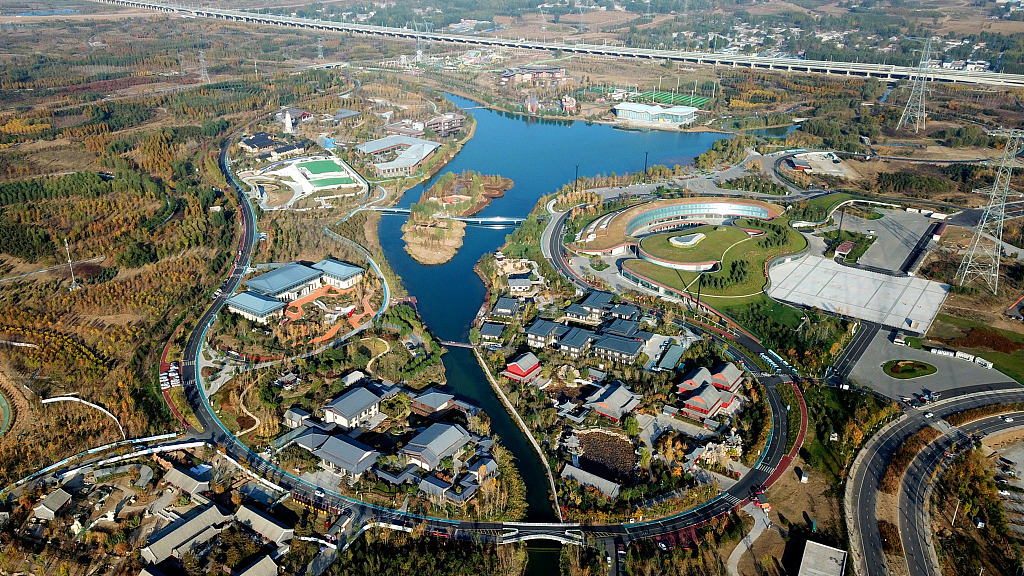
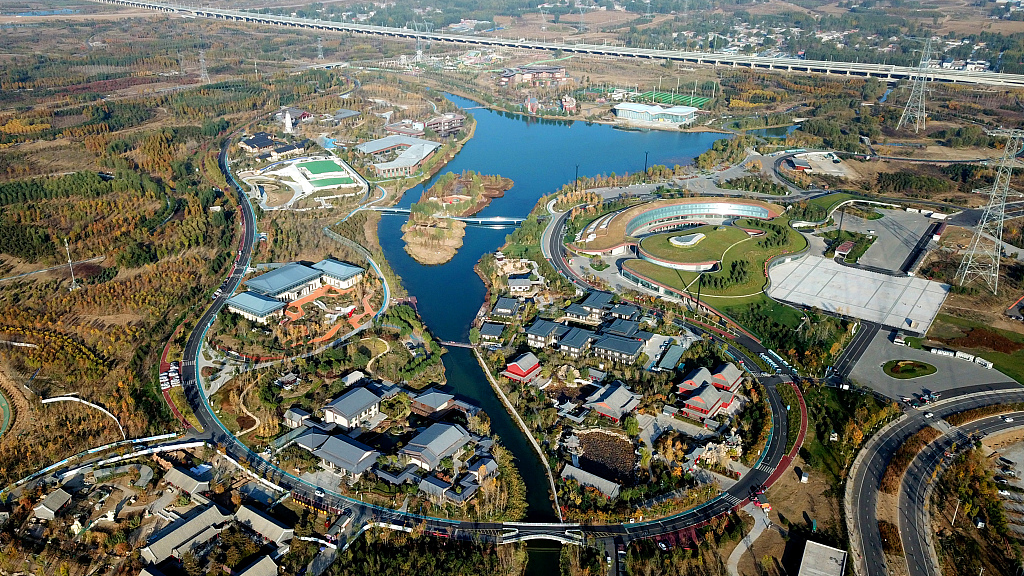
China has changed its capital city several times during the course of its long history, and is in the midst of reorganising its capital region once again with the Xiong’an New Area (未来之城). Like China, several countries in recent memory have embarked on ambitious initiatives to build new capital cities or reorganise existing ones in response to climate change, geographic factors, overpopulation or administrative congestion. Reorganising or raising capital cities is a complex task, fraught with challenges and prone to miscalculations, often delivering mixed results.
China is in the process of reorganising its capital city of Beijing by raising the Xiong’an New Area. Although its primary purpose is to relocate Beijing’s non-administrative functions, it is also presented as a “city of the future” (未来之城) with innovative, green, smart and world-class features which takes it beyond a simple reorganisation of capital functions. The Xiong’an New Area development is a new miracle model for China’s new urbanization pattern, high-quality development and technology innovation clusters. Backed by enormous political capital and greater reform autonomy, the Xiong’an model is a rethinking of the planning model China is deploying for economic growth.
Political Significance
Dubbed “a plan for the next millennium” (千年大计), Xiong’an is a “project of national significance” (国家大事). It is only China’s third such initiative after Shenzhen and Shanghai, which were policy experiments with transformative potential. Such projects are supported by enormous political capital, draw in significant investment, and represent a new direction of thinking in national economic development. Xi Jinping himself highlighted Xiong’an’s position alongside Shanghai Pudong New Area and Shenzhen Special Economic Zone at a Politburo meeting in May 2016; “Like Shanghai Pudong and Guangdong Shenzhen, it (Xiong’an) has national significance. This positioning must be firmly grasped.” The high-level positioning of Xiong’an by Xi, its positioning alongside Shanghai and Shenzhen and alignment with new economic thinking in China underscores its political significance.
Xiong’an is positioned prominently in other ways too. First, situated just 125 km southwest of Beijing, it enjoys a high degree of political visibility. Developments relating to Xiong’an can easily be promoted in Beijing as a model to be emulated and spread across the rest of the country. For instance, the National Development and Reform Commission’s (NDRC) circular No.73 explores the idea of Xiong’an as a model for green development city to be adopted nationwide. Second, state media has made a point to communicate that the push for Xiong’an comes from the top of China’s political system. It has carefully curated a narrative that sequences official announcements relating to Xiong’an after Xi Jinping’s actions, to underline Xiong’an as “personally planned, personally arranged and personally promoted” (亲自谋划、亲自部署、亲自推动) by Xi. For instance, the proposal in 2015 to establish a new city outside Beijing and in Hebei is attributed to Xi, and the announcement to establish Xiong’an was made by the Central Committee and State Council one month after Xi’s inspection of Anxin county in February 2017, where he inspected the location and planning details. The profile of Xiong’an is also elevated by the number of visits Xi has made to the New Area: four since 2017 and the latest was undertaken in March 2026 right after China’s 15th Five-Year Plan was released.
Furthermore, Xiong’an’s primary and secondary objectives are indicative of the expectations associated with the project. China’s top leadership is attempting to institute a new pattern of urbanization and shift the spatial pattern of economic growth towards quality over quantity. The term “Xiong’an quality” (雄安质量) has emerged to mirror this emphasis, just like “Shenzhen speed” (深圳速度) described the growth miracle of China’s reform and opening up period. The idea behind Xiong’an is one in which urban living spaces, innovation clusters and modern governance practices intersect, while avoiding the contradictions and negative externalities of China’s growth model in the last three decades. This idea is often discussed by state media in idealistic and futuristic language to emphasise the new direction Xiong’an embodies. At the same time, Chinese academics like Cong Yi of the Tianjin School of Administration argue that Xiong’an will become a model of high-quality development and a replicable experience for modernization. To this end, it has been institutionalised in a variety of national policy planning documents like the 15th Five Year Plan and 2025 Government Work Report, and has trickled down into provincial policy documents like Hebei provincial government work reports. It has been incorporated into the urban planning of China’s other provinces as well.
The Xiong’an model is also promoted outside China, as an answer to urban governance questions. For instance, the Ministry of Foreign Affairs (MOFA) organised a global promotion event in 2018 for the New Area, inviting foreign participation and adoption of Xiong’an solutions. Xiong’an’s growing status in development discourse at home and abroad elevates its significance as an urban development model, and by extension that of China as a pioneer of governance solutions.
Moreover, the reform autonomy granted to Xiong’an is indicative of the urgent search for new growth models that combine quality growth with quality living standards. It is vital for a Party which secured legitimacy mainly by generating economic prosperity. With domestic economic growth slowing, the less-publicised but parallel push for managing growth expectations and elevating social security is taking its place alongside the drive for new quality productive forces. The emphasis on improving the quality of life for social groups through initiatives like Xiong’an is increasingly relevant for political legitimacy.
Origins, Rationale and Objectives
The origin of Xiong’an is closely tied to Xi Jinping’s rise as General Secretary of the Party. Just a few months after his appointment, at a study session held at Beidaihe in August 2013, Xi expressed the need to explore the coordinated development of Beijing-Tianjin-Hebei, or the Jing-Jin-Ji (京津冀). The directive was formalised in planning documents of subsequent years like the “Beijing-Tianjin-Hebei Coordinated Development Plan Outline” of 2015, “Report on the Planning and Construction of Beijing Sub-center and Research on the Establishment of Hebei Xiong'an New Area” of March 2016, “Hebei Xiong'an New Area Planning Outline” of 2018 and several others. The administrative operations, policy initiatives and coordination for actualising Xiong’an were brought into sharper focus with a variety of discursive and planning instruments since 2017.
Policy planning documents rationalise Xiong’an by discussing bottlenecks and limitations facing China’s capital and its surrounding areas. First, the development momentum of China’s capital region has slowed due to an ageing demographic structure and the region’s declining GDP share. Li Guoping of Tsinghua’s Beijing Development Institute points out that the Jing-Jin-Ji (京津冀) region’s share of national GDP has declined from 11% in 2011 to 8.5% by 2020, and its population attraction has weakened too. Second, uneven patterns of economic development characterise the region, with Beijing and Tianjin as high-income, tertiary economies and regions in Hebei constituting a “poverty belt” around Beijing and Tianjin (环京津贫困带). Chinese media has often discussed the spatial distribution of poverty in the region, especially in areas like Zhangjiakou, Baoding and others, and Chinese academic literature also mentions a ring-shaped area bordering Beijing and Tianjin comprising 32 impoverished counties as policy blind spots.
A related concern is resolving imbalanced industrial layout of the region: concentration of high-end economic activity in Beijing and Tianjin, while Hebei maintains a relatively backward industrial structure. The “siphoning effects” of such an industrial layout have been targeted for improvement through Xiong’an. Third, addressing the risks from natural disasters like flooding are considered necessary to improve the resilience of the capital region. The overarching policy objective for Xiong’an, tying the various drivers together, is expressed as a relocation of non-capital functions to address “big city disease” (大城市病), improvement of the regional economic layout and fostering of innovation clusters. These competing rationales inform the positioning, objectives and development strategy for Xiong’an.
The goals laid out for Xiong’an by the Hebei Xiong’an New Area Planning Outline are for the region to become a high-level socialist modern city by 2035 and a high-quality, high-standard socialist modern city by 2050. Specific targets have been identified for these phases of development relating to urbanization, innovation and governance. For instance, in the phase between 2023-2027, Wei Delin, Wang Hongwei and Zhang Jingwen state that Xiong’an will set an R&D investment intensity target of 3.5%, which will increase to 6% by 2035. Another target is that 80% of motor vehicle trips in the starting area of Xiong’an should be via public transport, and the proportion of green travel should reach 90%. The specific targets support the broader goal of building a city of the future, leveraging technology and governance strengths to shape urban development.
Driving Forces of the Miracle Model
Xiong’an is a statement on China’s new urbanization pattern, which redefines how urban spaces are organised alongside technology-intensive economic activity. Technology in this urban concept is expected to provide intelligent governance, health and safety services, improve ease of living and support sustainability. For instance, the China Centre for Urban and Small Town Reform and Development, in an NDRC-funded project, discusses Xiong’an in the context of digitalization and intelligence development that improves urban governance. Xiong’an follows the “1+4+26” (1+4+26规划体系) urban planning system, which includes a single master plan, 4 regional plans and 26 specialised plans that cover virtually all aspects of urban construction and development. The layout is planned on the concept of “one centre, five auxiliary groups and multiple nodes” (一主、五辅、多节点), which includes the city centre of Xiong’an, five surrounding regions of Xiong, Rongcheng county, Anxin, Zhaili and Zangang, and multiple small towns and villages in the region as nodes. The philosophy emphasises urban groupings separated by ecological corridors, to avoid a single urban core and urban sprawl in favour of polycentric urban development that combines ecological preservation with living spaces.
The logic of Xiong’an’s urbanization pattern is the “15-minute living circle” (15分钟生活圈) standard, similar to the one proposed by the Ministry of Housing and Urban Development’s Guide to Building Complete Communities. The concept locates residents’ daily needs for education, healthcare, leisure and entertainment within a 15-minute walking radius. Xiong’an construction guidelines identify 10 facilities that influence this standard: kindergartens, health service stations, cultural activity stations, neighborhood management service stations, resident care stations, convenient commercial points, home-based elderly care stations, outdoor sports fields, parks, and fitness trails. Convenience and accessibility of daily necessities are emphasised in Xiong’an’s planning, ensuring that residents travel less for services, vehicular traffic is reduced and congestion associated with hotspots in urban centres are eliminated. However, this standard faces challenges of uneven distribution of services, complaints about quality, barriers between circles and insufficient last-mile transport connectivity.
The urbanization pattern in Xiong’an is meant to address “big city problems” (大城市病) associated with metropolitan centres, like pollution, resource shortages and traffic congestion. As a result, the planning follows an urban spatial layout of clusters separated by greenbelts. The ecological planning slogan of, "3 kilometers into the forest, 1 kilometer into the forest belt, 300 meters into the park, and parks everywhere" (三公里进森林、一公里进林带、三百米进公园、处处是游园) establishes that every resident should be within 3km of a large forested area, within 1 km of an ecological belt and within 300 meters of a neighbourhood park. It marks a shift in the planning of urban centres in China, incorporating newer demands of ecological protection, high-quality housing and social service provision.
Xiong’an is also a model for high-quality development, where technology innovation clusters are forming with the arrival of SOEs, private enterprises and state institutions. Xi Jinping called for efforts to build Xiong’an into an “innovation development demonstration area for implementing the new development philisophy” (贯彻落实新发展理念的创新发展示范区) in 2017.This position is enabled by attracting high-tech enterprises through a variety of incentive and support policies, like the “Measures to Promote High-Level Scientific and Technological Innovation and Industrial Development”, issued by the Hebei Xiong'an New Area Management Committee. It offers subsidies for enterprises participating in technology transfer, setting national or regional standards, making R&D investments, and for setting up national laboratories and innovation centres. It also offers a three-year support package of 1 million yuan to high-tech enterprises that relocate entirely to Xiong'an and align with its industrial layout.
Policy plans like the “Xiong’an Action Plan for Promoting the Development of Future Industries” have prioritised three future industries for development - aerospace information and satellite internet, artificial intelligence, and new materials. Hou Wanyue, Dong Baoqi and Yang Boxu in a paper on the innovation policies of Xiong’an note that institutional space and policy advantages of Xiong’an have resulted in initial signs of agglomeration and clustering of such future industries. More broadly, the Hebei Xiong'an High-tech Industrial Development Zone was upgraded to a national high-tech industrial development zone in February 2026 to support the high-quality development model.
A variety of innovation platforms, laboratories, buildings and institutions have been set up in Xiong’an to house enterprises and support innovation. In 2024, China established the Aerospace Information and Satellite Internet Innovation Alliance in Xiong’an, as a platform to enable collaborations between enterprises in the aerospace sector. Similarly, the Xiong'an Innovation and Research Institute under the Chinese Academy of Science, Xiong'an Science and Technology Innovation Center, Xiong’an Center of the National Stem Cell Engineering Technology Research Center, Xiong'an Energy Internet Innovation Center of the State Grid and several other research and innovation centres have been set up. Buildings and parks like the Zhongguancun Science Park and Xiong'an Artificial Intelligence (AI) Industrial Park are major carriers of the innovation impetus. With 27 themed buildings in Zhongguancun, like the low-altitude economy building, aerospace information building and AI building, Xiong’an’s is organised to support specialisation and research collaboration.
Moreover, talent and investment attraction measures are in place to draw in human resources required to sustain innovation and capital required to finance it. For instance, the “Sixteen Measures for Xiong'an Talents” was introduced in 2024 to attract domestic and international talent to innovate and start businesses. The Xiong Cai talent card system, an extension of Yanzhao Elite Talent Service Card, has also been instituted, with 16,000 cards issued to outstanding professionals and young talents. In terms of investment, Xiong’an rewards companies that establish new headquarters or regional headquarters in the New Area with 6 million yuan. Similarly, the “Implementation Plan on Further Expanding the Scope of Private Investment” provides support up to 100 million yuan for major AI projects in terms of key equipment and software. Through its policy incentives, Xiong’an has made significant progress in terms of relocating Beijing’s non-capital functions, instituting a new pattern of urbanisation and cultivating the conditions for high-quality development.
Outcomes and Progress
Since the beginning of the ambitious initiative, Beijing has made notable progress in its stated objectives. A total of 835.4 billion yuan has been invested, 202 sq km of area has been developed, 4,792 buildings have been erected and 804 km of new roads have been laid, along with 160 km of underground utility tunnels. In terms of the stated primary objective of reorganising capital functions, government and administrative functions have been moved into Tongzhou’s Beijing Municipal Administrative Centre, with the last government office scheduled to move into the new facilities by the end of 2026. Moreover, Beijing and Xiong’an’s functions have been integrated with a cross-provincial "cloud" service platform, allowing over 3,500 items from Beijing's municipal and district levels to be processed directly in Xiong'an. In terms of other non-capital functions, nine areas including investment, education, healthcare, social security, housing, medical insurance, finance and taxation and financial services have seen enterprises and institutions move into Xiong’an.
In the education sector, universities in Beijing like Beijing Jiaotong University, University of Science and Technology Beijing, Beijing Forestry University and China University of Geosciences have moved into Xiong’an, and a second batch have confirmed relocation locations. Others like Peking University are establishing talent recruitment workstations and setting up a Xiong’an branch of their schools. According to the national plan for the relocation of universities in Beijing, by 2035, 15 Ministry-affiliated universities in Beijing will be relocated to Xiong'an. In terms of corporate headquarters, Sinochem, StarNet China, China Huaneng, China Minerals have all started construction of their Xiong’an headquarters and 300 central SOE’s have established units within Xiong’an. A total of 4,000 private companies has relocated from Beijing, and most recently e-commerce giant, Pinduoduo established its Xiong’an branch in June 2026.
The relocation of enterprises is not just reducing the administrative congestion of Beijing, but also supporting innovation cluster development in Xiong’an. In the aerospace industry, nearly 60 aerospace enterprises are part of the cluster in Xiong’an, and over 200 companies in the field of aerospace, satellite internet, new materials and AI are operating in close proximity. In the nine years since its establishment, Xiong’an has set up 69 provincial and ministerial-level innovation platforms and identified 680 national high-tech enterprises. While these achievements demonstrate significant advances in implementation, they also highlight the scale and complexity of the project, bringing into sharper focus the challenges associated with Xiong’an.
Challenges of Execution
Xiong’an is often presented as the model for a new generation of smart, green and innovation-driven cities. However, China has a long history of experimental urban development projects, many of which struggled to achieve their intended outcomes. While Xiong’an has made visible progress in infrastructure construction and institutional relocation, significant challenges remain in its transition from a state-led development project into a self-sustaining innovation hub. A major challenge lies in the integration of technology, industry and innovation ecosystems. Although Xiong’an has attracted universities, state-owned enterprises and research platforms, it lacks the deep scientific and technological foundations and local supporting industries of Beijing and Tianjin. The counties of Xiongxian, Rongcheng and Anxin do not possess major universities and national innovation platforms, resulting in limited indigenous research and development capabilities. Moreover, as Prof. Liu Zhiyong, Professor of the School of Urban and Public Administration at the Capital University of Business and Economics argues, Beijing and Tianjin’s strong agglomeration advantages in talent, capital and technology, also create a “siphoning effect” that limits the coordinated development of the Beijing-Tianjin-Hebei region.
Existing policy support has also been criticized for emphasizing short-term incentives, project-based funding and administrative directives rather than long-term institutional arrangements and market-oriented mechanisms. For instance, policy resources have been disproportionately directed toward central state-owned enterprises, and many relocated enterprises have transferred administrative functions rather than core research teams. Similarly, policy support for mid-level technical talents and applied talent is limited, making it difficult to form a multi-level comprehensive talent support system. Even the industrial structure of Xiong, Rongcheng, and Anxin is dominated by traditional manufacturing and labour-intensive industries, with relatively low technology content and added value, creating a disparity between Xiong’an’s economic structure and that of the regions around it. Furthermore, there are significant environmental and sustainability concerns with the plan to upgrade the industrial structure of Xiong’an. The strict ecological requirements surrounding Baiyangdian Lake place limits on industrial development, creating a delicate balance between economic growth and environmental sustainability that will shape Xiong’an’s long-term trajectory.
The Way Forward
Nearly a decade after its announcement, Xiong’an New Area remains one of the most ambitious state-led urban development projects in China. More than a new city, it represents an attempt to address several structural challenges simultaneously: relieving pressure on Beijing, rebalancing development within the Beijing-Tianjin-Hebei region, creating a new model of urbanization and cultivating the foundations of high-quality growth. The scale of political commitment, financial investment and institutional support devoted to the project underscores its significance within China’s broader modernization strategy.
Xiong’an has already achieved substantial progress in infrastructure construction, administrative reorganization and the relocation of institutions. At the same time, the project’s ultimate success will depend less on physical construction than on its ability to generate self-sustaining economic activity, attract and retain talent, foster genuine innovation ecosystems and balance development with environmental constraints. These remain long-term challenges that cannot be resolved through administrative directives or SOEs alone.
Xiong’an is both a policy experiment and a demonstration project. If successful, it could provide a replicable model for integrating smart governance, ecological planning and innovation-driven development into future urbanization efforts. If it struggles to attract people, capital and technology on a sustained basis, it will highlight the limitations of top-down planning in creating dynamic urban economies. As such, Xiong’an should be viewed not simply as a regional development initiative, but as a test case for China’s evolving approach to economic governance, urban modernization and national development in the decades ahead.
Image Credit: CGTN
Author
Rahul Karan Reddy
Rahul Karan Reddy is Senior Research Associate at Organisation for Research on China and Asia (ORCA). He works on domestic Chinese politics and trade, producing data-driven research in the form of reports, dashboards and digital media. He is the author of ‘Islands on the Rocks’, a monograph on the Senkaku/Diaoyu island dispute between China and Japan. He is the creator of the India-China Trade dashboard, the Chinese Provincial Development Indicators dashboard and co-lead for the project ‘Episodes of India-China Exchanges: Modern Bridges and Resonant Connections’. He is co-convenor of ORCA’s annual conference, the Global Conference on New Sinology (GCNS) and co-editor of ORCA’s daily newsletter, Conversations in Chinese Media (CiCM). He was previously a Research Analyst at the Chennai Center for China Studies (C3S), working on China’s foreign policy and domestic politics. His work has been published in The Diplomat, 9 Dash Line, East Asia Forum, ISDP & Tokyo Review, among others. He is also the Director of ORCA Consultancy.