

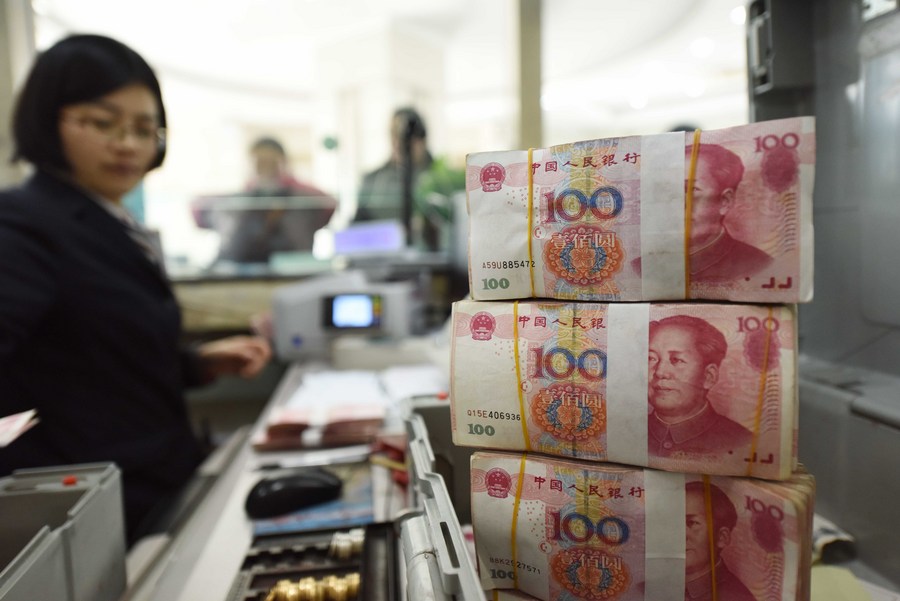
China’s push to internationalise the renminbi (RMB) has entered a more pragmatic and network-driven phase. In its efforts to reduce dependence on the Dollar-led global financial order, Beijing is steadily constructing a network of offshore financial centres that extend RMB usage through trade, capital markets and digital finance. Among these, Singapore has emerged as a pivotal node—not simply facilitating RMB transactions, but shaping how the currency circulates across Southeast Asia and beyond.
According to the People’s Bank of China’s 2025 RMB Internationalisation Report (人民币国际化报告), Singapore now ranks among the top offshore RMB hubs globally, only behind Hong Kong. It accounts for 276 billion RMB worth of deposits, contributing to a growing share of RMB trading and cross‑border settlements in Southeast Asia. The recent announcement to designate DBS Bank as Singapore’s second RMB clearing bank further strengthens its role in global offshore RMB markets. Singapore’s emergence as an RMB hub is therefore not accidental. For Beijing, it offers a politically neutral, globally trusted platform at a time when Beijing’s security-driven priorities for Hong Kong are increasingly affecting its financial role. For Singapore, aligning with RMB internationalisation is a strategic bet to embed itself in China–ASEAN economic integration, while diversifying its financial opportunities and risks.
Financial Architecture and Institutional Depth
Singapore’s centrality to RMB internationalisation rests on the steady expansion of financial infrastructure and institutional coordination. What initially began as clearing arrangements has now evolved into deeper capital market integration, liquidity provision and regulatory alignment. Recent initiatives on the expanded access to China’s bond market, now exceeding 25 trillion USD, enable Singapore‑based institutions a greater role in facilitating foreign participation in the RMB market.
Singapore’s offshore RMB liquidity ecosystem has strengthened significantly in recent years. The city now hosts two RMB clearing banks—ICBC Singapore, appointed in 2013, and DBS, designated in 2025—enhancing direct access to Chinese financial markets. Anchored by its role as the world’s third-largest foreign exchange centre, Singapore consistently ranks among the leading offshore venues for RMB trading. As a result, it has emerged as one of the most important RMB clearing hubs, accounting for 9.7 trillion RMB payments clearing in 2024, underpinning its position as a regional hub for offshore RMB liquidity management and trade settlement.
Similarly, three Singaporean banks have now become a part of China’s cross-border interbank payment system (CIPS) – an alternative to SWIFT, which reduces payment costs and clearing time for RMB transactions. This not only makes these institutions an attractive option for RMB-based settlements, but also allows China to gain more acceptance in strengthening an alternative financial system. At a systemic level, this reflects an emerging dual-hub model: Hong Kong remains the gateway for mainland-linked financial flows, while Singapore is emerging as a preferred hub for ASEAN-driven and globally diversified capital.
Singapore’s own strategic calculus is equally important in explaining this trajectory. As a global financial centre dependent on cross-border capital flows, it has strong incentives to position itself at the forefront of emerging currency ecosystems. Supporting RMB internationalisation allows Singapore to capture a growing share of China-linked trade settlement, wealth management and capital market activity, particularly as ASEAN economies continue to deepen integration with China. It also enables diversification beyond the traditional dollar-dominated system while preserving its role as a neutral financial hub. Thus, Singapore is proactively adapting its financial system to reinforce its position as Asia’s leading international financial centre by attracting RMB settlements.
Trade Networks and Digital Currency Cooperation
Singapore’s strategic position in RMB internationalisation is also amplified by its position within China–ASEAN economic networks. ASEAN has emerged as China’s largest trading partner, with total trade surpassing 1 trillion USD in 2025. This positions ASEAN as a significant gateway for China to expand the usage of the yuan in trade settlements. In the past few years, RMB settlement in trade has increased significantly, with over a quarter of China’s cross-border trade now conducted in its own currency. While China has been attempting to establish Petroyuan in global energy trade, Southeast Asia offers a relatively stable environment to expand RMB across the Indo-Pacific through the emerging China-ASEAN+ framework. Singapore, as a primary regional RMB hub, facilitates this shift by providing the infrastructure for RMB invoicing, settlement and financing, thereby reducing transaction costs and currency risks for regional firms.
On the other hand, the next phase of RMB expansion is increasingly linked to digital finance. China has been extending the use of its digital yuan (数字人民币) into cross‑border settings involving Singapore and ASEAN trade corridors, signalling a cautious but deliberate effort to modernise payment infrastructure and reduce dependence on dollar‑based payment systems. In late 2025, Beijing announced plans to pilot cross‑border digital yuan payments with Singapore as part of broader efforts to integrate the e‑CNY into regional trade networks and logistics corridors connecting China with Southeast Asia.
At the bilateral level, Singapore and China have launched a phased pilot allowing Singapore‑based users to open and top up e‑CNY wallets. Initially targeted at tourism and low‑value payments, it symbolises China’s efforts to establish cross-border regulatory and technical interoperability to popularise the usage of e-CNY. While these arrangements remain limited in scope and in the pilot stage, they underscore Singapore’s role as a trusted testing ground for China’s cross‑border digital currency experiments. Over time, such frameworks could support wider adoption of RMB settlement in trade‑intensive sectors, even though they are unlikely to fundamentally alter the dollar‑centric global payments system in the near term.
Green finance has emerged as another important channel for RMB usage between China and Singapore. Through initiatives such as the Singapore–China Green Finance Taskforce, both sides have encouraged RMB‑denominated green bonds, sustainability‑linked loans and transition finance. Unlike trade settlement, green finance embeds RMB usage in a long‑term, standards‑driven investment flows, anchoring the currency in Asia’s energy transition. Taken together, these developments suggest that Beijing is consolidating its role as a regional trade and investment currency, embedded within Asia’s production and payment networks. With the help of Singapore’s credible institutions, efficient infrastructure and regulatory stability, China aims to translate its currency ambitions into practical, regionally grounded outcomes.
Structural Limits and Strategic Outlook
Despite steady progress, RMB’s international expansion continues to face binding structural limits. Despite improvement in access to Chinese markets, constraints like exchange rate volatility, limited capital mobility and regulatory uncertainty still limit the RMB’s attractiveness to global investors. As a result, the currency still accounts for less than 3 percent of global foreign exchange reserves and payments relative to China’s economic scale.
It is because of these constraints that Singapore’s role has become strategically significant. Rather than pushing for domestic reform, Singapore functions as an external financial gateway, allowing RMB usage to expand offshore without requiring full capital account openness at home. Through its stable legal environment, deep financial markets and global credibility, Singapore enables RMB circulation in trade, finance and investment while insulating global participants from some of the uncertainties associated with China’s domestic financial system. Furthermore, intensifying US–China competition has heightened risks of financial decoupling and regulatory divergence, increasing the value of politically neutral intermediaries. Singapore’s role reduces these geopolitical risks for global and regional actors, helping sustain the RMB usage even as geopolitical pressures intensify.
China’s initiatives with Singapore, particularly with respect to digital currency and green finance, complement existing offshore architectures by improving efficiency and lowering transaction costs. Singapore’s openness to financial experimentation allows these incremental innovations to be tested and deployed without reshaping the underlying monetary order. Thus, China aims to expand its monetary influence through Singapore at a time when the domestic economic environment remains volatile. After Hong Kong, it has become China’s most consequential offshore RMB hub for a regionally embedded, alternative RMB ecosystem. While the displacement of the Dollar system still remains a distant prospect for China, it continues to consolidate a durable RMB sphere centred on Asia, with Singapore playing a critical coordinating role.
Image Credits: Xinhua
Author
Omkar Bhole
Omkar Bhole is a Senior Research Associate at the Organisation for Research on China and Asia (ORCA). He has studied Chinese language up to HSK4 and completed Masters in China Studies from Somaiya University, Mumbai. He has previously worked as a Chinese language instructor in Mumbai and Pune. His research interests are India’s neighbourhood policy, China’s foreign policy in South Asia, economic transformation and current dynamics of Chinese economy and its domestic politics. He was previously associated with the Institute of Chinese Studies (ICS) and What China Reads. He has also presented papers at several conferences on China. Omkar is currently working on understanding China’s Digital Yuan initiative and its implications for the South Asian region including India. He can be reached at [email protected] and @bhole_omkar on Twitter.